Pokémon Legends: Z-A Beginner Tips: Best Starter and Early Mistakes to Avoid
Which starter to pick, how to land stealth catches, and the early mistakes that slow down a run through Lumiose City in Pokémon Legends: Z-A.

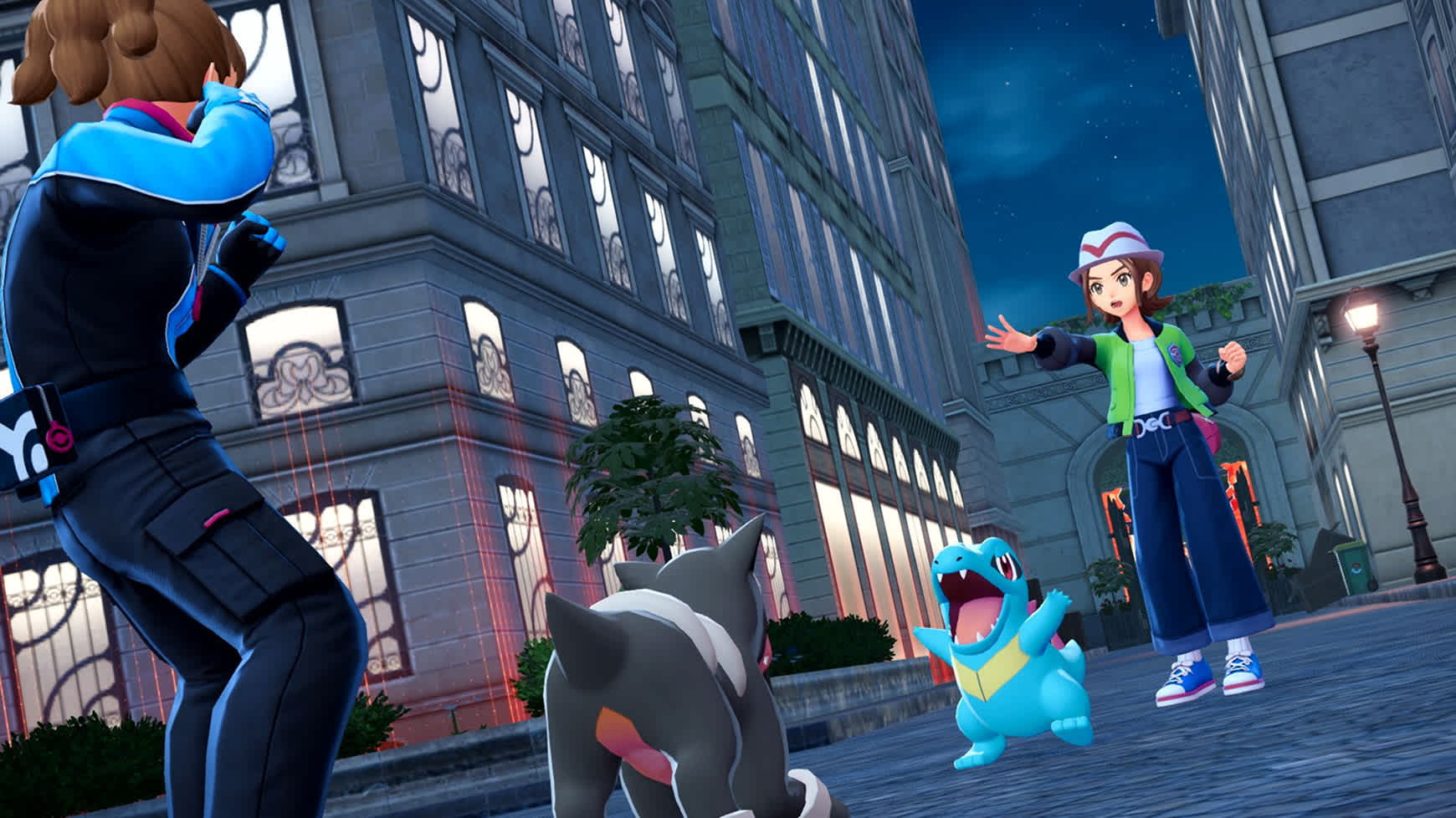
A Z-A Royale battle lights up Lumiose City at night. Image: Nintendo.
Pokémon Legends: Z-A drops the series' turn-based battles for a real-time system set inside a single city, and that change breaks a lot of habits new trainers bring in from older games. The starter pick, the catching routine, and the pace of early fights all work differently here. This guide covers the choices that matter most in the first few hours: which starter to take, how to land catches without wasting balls, and the early-game mistakes that slow down a run through Lumiose City.
Picking a starter: Chikorita, Tepig or Totodile
About twenty minutes into the story you choose one of three starters: Chikorita (Grass), Tepig (Fire) or Totodile (Water). Two come from the Gold and Silver era and Tepig fills in for the fire slot usually held by Cyndaquil. The pick is not permanent in the way it looks at first. You can end up with all three over the course of the game by trading or by catching the other two out in the wild later on, so the early decision is about which Pokémon carries you through the opening hours, not a Pokémon you are locked into forever.
- Totodile is the safest first pick. It only has two type weaknesses, picks up a wide spread of Water-type TMs early, and its Mega Evolution, Mega Feraligatr, hits hard as a physical attacker with useful coverage.
- Tepig trades survivability for damage. It is the hardest hitter of the three early on, but its recoil-heavy moves and low Speed make it fragile once tougher trainers show up.
- Chikorita has the best defensive stats of the trio, but Lumiose City's early fights lean on Fire- and Flying-type opponents, which gives Chikorita a rough start regardless of its bulk.
Whichever starter you choose, check the official Pokémon.com Pokedex for full type matchups before a big fight rather than guessing from memory.
Catching without wasting Poke Balls
Z-A lets you catch most wild Pokémon without battling them first, which is new for a mainline-adjacent title. Crouch before you approach: staying low and moving slowly keeps a Pokémon from noticing you, and a Poke Ball thrown from behind an unaware target has a much higher catch rate than a frontal throw. If a stealth throw misses or the Pokémon spots you, knocking it out in a short fight first is the reliable fallback.
Ball type matters more here than in past games. Dive Balls work best against Pokémon in or near water, Dusk Balls are stronger at night, and Quick Balls are most effective against a Pokémon that has not yet noticed you, which overlaps with the stealth approach above. You can swap ball types from the quick menu mid-encounter, so there is no reason to default to standard Poke Balls once you have better options unlocked.
Reading the real-time battle system
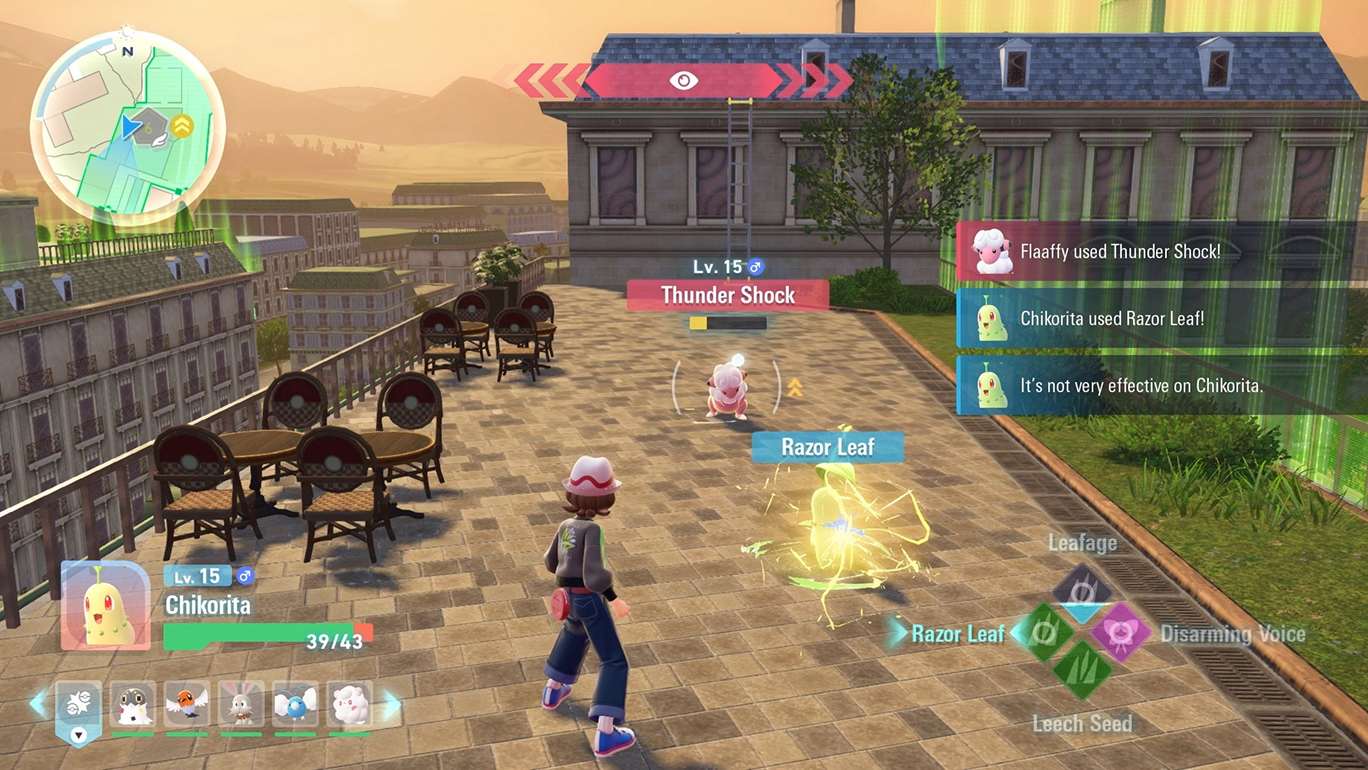
Combat in Z-A plays out as a MOBA-style real-time system rather than a turn order. Type effectiveness is shown directly over your move icons: two overlapping circles mean the move is super effective, one circle is neutral, a triangle is not very effective, and an X means it does nothing. Watch for these symbols before committing to an attack, since the window to cancel a move once it starts is short.
Positioning decides most fights. Several moves push your Pokémon forward as they execute, so lining up an attack also means lining up where you will end up standing when it lands. If a big hit is incoming and you are out of position, recalling your Pokémon just before the attack connects keeps it safe at the cost of a turn. Stepping out of an opponent's attack path and then immediately returning fire is the core defensive loop the game expects you to learn early.

Mega Evolution and the Z-A Royale
Mega Evolution returns as the game's headline mechanic and is tied directly into the Z-A Royale, the ranked tournament that drives the story's structure. Trainers start at Rank Z and climb toward Rank A through nighttime battles in Lumiose City; several story-relevant Mega Evolutions, including Mega Charizard X and Y, Mega Gardevoir and Mega Kangaskhan, show up as both allies and rivals use them. In the Royale's timed matches, Mega Evolving gives your Pokémon a brief window of invincibility, which is worth saving for a moment when you are about to eat a hit rather than using it the instant it becomes available.
Resting on a bench advances time once you are far enough into the story, which is one of the few ways to force night to fall on demand and unlock Royale access outside of waiting around. Promotion matches can be entered during the day or night once you hold a Challenger's Ticket, and Ticket Points carry over across multiple nights, so there's no need to finish a promotion push in a single sitting.
Early mistakes to avoid
- Ignoring Mabel's Research in the main menu. Completing her requests earns TMs, but the game does not hand them to you automatically — you have to open the menu and redeem them yourself.
- Skipping fast travel. Pokémon Centers register themselves on your map as fast-travel points the first time you visit, and taxis can take you to areas you haven't explored yet, both of which cut down on backtracking across Lumiose City.
- Forgetting to heal before a Royale match. Pokémon Centers double as the only full-heal stations in the city, and a Royale loss from entering at low HP costs more time than the walk back would have.
- Button-mashing moves with long cooldowns in multiplayer. In Ranked and Private Battles, wide-area moves like Surf or Earthquake and evasive options like Fly or Dig are stronger picks for faster matches, and you only get three swaps per match, so burning them early leaves you stuck late.
The ESRB rates Z-A E10+ for Fantasy Violence, its first mainline-adjacent entry rated above E, which lines up with how much busier and more frantic its real-time fights are compared to older turn-based games. For deeper mechanical breakdowns, Nintendo's own tips and tricks roundup and the game's entry on Wikipedia are good places to confirm details before you commit to a build. Full patch and update history is tracked on the official Pokémon news page.