Hollow Knight: Silksong Beginner Tips: Map, Rosaries and Crests
What to prioritize in Hollow Knight: Silksong's brutal opening hours: finding the map before you explore, managing Rosaries after death, patient combat, and picking a Crest that fits your playstyle.

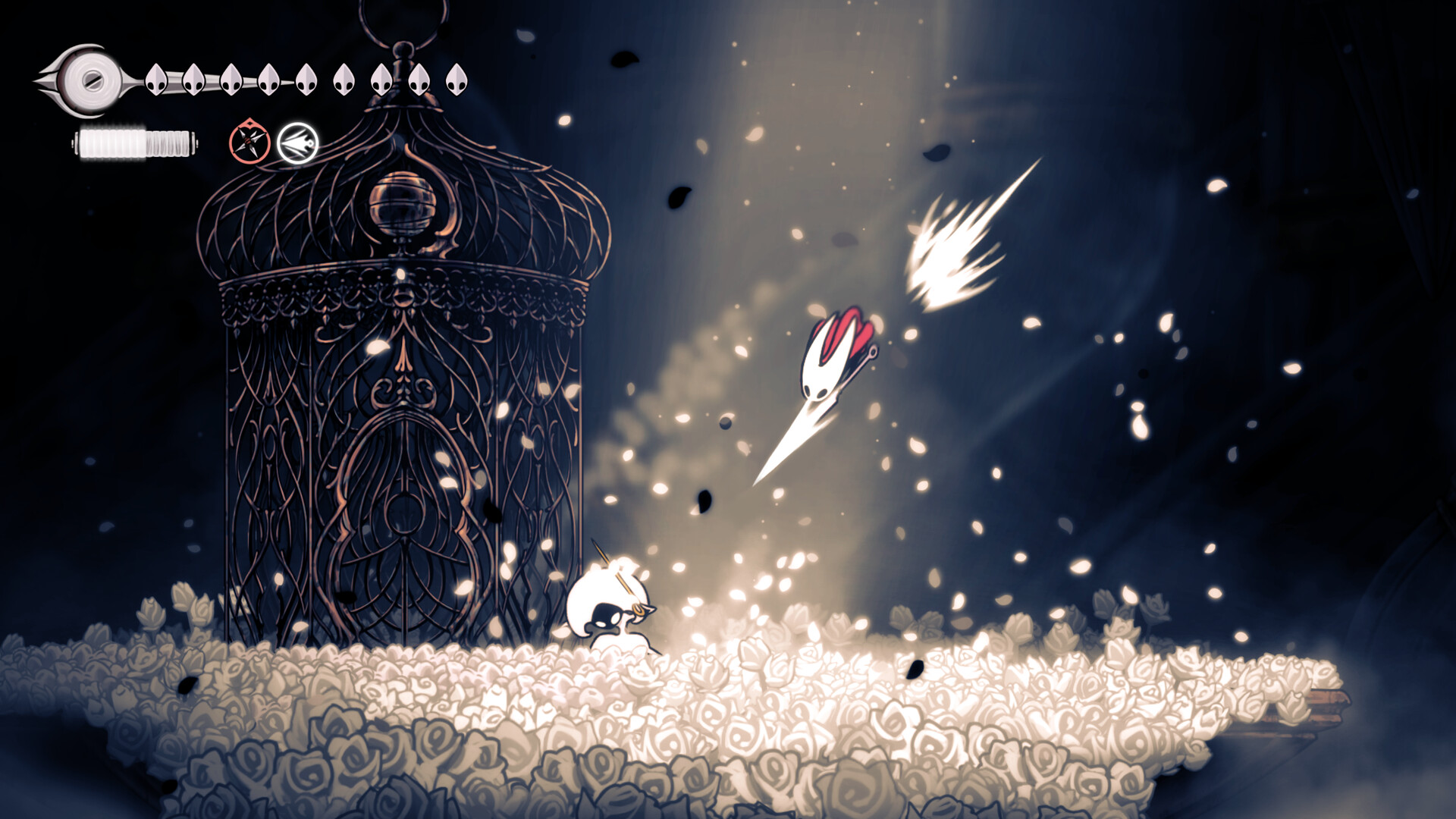
Combat in Hollow Knight: Silksong rewards patient hit-and-reposition play over trading blows head-on. Image: Team Cherry.
Hollow Knight: Silksong throws Hornet into Pharloom with no map, no compass and no clear idea which of her early tools are worth carrying. A year after launch it is still one of the most punishing openings in modern platforming, and most of that difficulty is unforced: players die to mistakes the game never explains, not to genuinely unfair fights. Here is what actually matters in the first several hours, updated for the current build.
Get a map before you explore anything
Every new area in Pharloom is unmapped until you find Shakra, the traveling cartographer who sells that region's map. Walking into an unmapped zone blind wastes time and gets you lost near vents and drops that are easy to fall into but hard to climb back out of. As soon as you enter a new area, prioritize finding Shakra over fighting or looting. Two purchases from her matter more than anything else early: the Quill, which lets Hornet record new map details automatically at any bench, and the Compass, an equippable Tool that shows your live position on the map. Without the Quill you have to manually redraw sections of the map at a bench before they display, which catches new players off guard the first time a fully explored room still looks blank.

Rosaries are currency, and death costs you all of them
Rosaries function like Geo in the original Hollow Knight: they buy tools, upgrades and Crests, and you drop your full stack on death, marked at the point where you died. You get one chance to walk back and reclaim it before it is gone for good. Two systems soften this. Rosary Strings, found across Pharloom, let you pin a portion of your current Rosaries to your bench so a death does not wipe you out completely. Certain vendors will also bank Rosaries for a fee, converting risk into a guaranteed but smaller return. Early on, spend down to near zero before pushing into an unscouted room rather than carrying a large balance into a fight you have not seen yet.
Combat rewards patience, not aggression
Hornet's needle has short range and enemies in Silksong hit harder than in the first game, so trading blows head-on gets you killed fast. The pattern that works is hit-and-reposition: land one or two strikes, then back off or jump out of range instead of chaining a combo. Her downward diagonal strike clears most airborne and low enemies that give new players trouble, and attacking from above generally beats attacking from the side. Healing draws from the Silk meter in the top left, which only fills by landing hits, so a fight that goes badly can leave you unable to heal at all. Retreating early to rebuild Silk is usually faster than pushing through on low health.
Crests change your entire kit, so try all of them
Crests are the loadout system underneath Hornet's tools: each one changes her base moveset, what her Bind ability does, and how many red, blue and yellow tool slots she has available. Red slots hold offensive tools, blue slots hold defensive ones, yellow slots hold passive and exploration effects. You can only swap Crests and Tools at a bench, so decide on a loadout before a boss run rather than mid-fight. No Crest is strictly better than another; they suit different playstyles, and a build that feels weak in one area of Pharloom can feel great in the next. Unlocking more Crest slots requires a Memory Locket, generally found off the main path rather than sold in shops, so expect to backtrack once you have the means to reach places you originally skipped.
Know what changed in the current patch
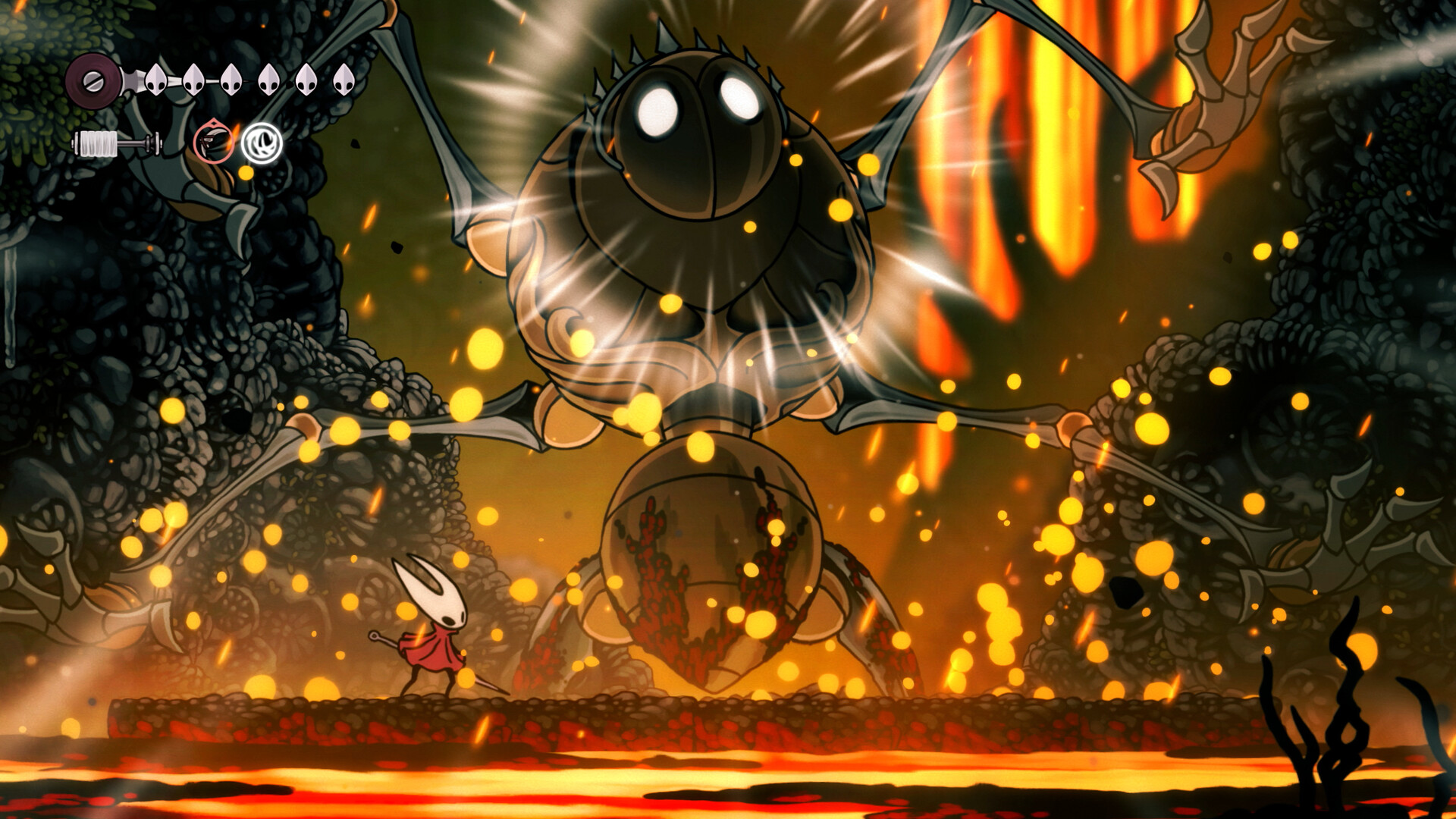
Team Cherry has kept updating Silksong well past launch, and Patch 5, billed as the last significant update before the free Sea of Sorrow expansion, is worth knowing about if you are starting now. It adjusted how Silk Soar interacts with scene transitions, reduced Last Judge's death-explosion damage, let the Magma Bell Crest block all fire-type explosions, and added a bench near Pale Lake that removes one of the more annoying backtracks in that region. None of these are things a first-time player would notice missing, but they make specific fights and routes noticeably less punishing than they were at launch.
- Talk to every NPC repeatedly; side content and quests frequently unlock only after a second or third conversation.
- Bump into suspicious walls and dead ends. Silksong hides paths and Rosaries behind breakable terrain more often than the original game did.
- Rest at benches often. Beyond saving, they are where map data syncs, Crests swap and fast travel becomes available once unlocked.
- Don't fully commit to one Crest before trying at least two or three; the differences in feel are large enough that your favorite build is unlikely to be your first one.
Where to go if you get stuck
Silksong intentionally gives few direct hints about where to go next, which is by design rather than a bug. If a route feels impossible, the more likely explanation is a tool or ability you have not found yet, not a jump you are supposed to be able to make. Team Cherry's own Silksong site and the game's Wikipedia entry are reliable references for release history and platform details if you want to double check anything here. The game is available on Steam and on PlayStation, Xbox and Nintendo platforms; see our Bell Beast boss walkthrough for a step-by-step look at one of the fights these tips are meant to prepare you for.