Fire Emblem: Fortune's Weave: Best Starting Path and How to Master Blaze Arts
Four Flame Lords, one tournament and a Blaze Gauge that punishes greed. Here's which path to start on and how to use Blaze Arts without triggering a costly Burst.


The four Flame Lords and their allies face down Dagsion's Heroic Games. Image: Nintendo.
Fire Emblem: Fortune's Weave landed on Nintendo Switch 2 this week, and it changes more about the formula than a new setting and cast. The 18th mainline entry in the series, developed by Intelligent Systems and published by Nintendo, splits its opening act into four separate campaigns, drops the weapon triangle that has defined combat since the Game Boy Advance era, and adds a new HP-spending special attack system called Blaze Arts. None of that is optional tutorial dressing. It's the whole game, and getting the first few hours right matters more here than in most Fire Emblem entries.
Four Flame Lords, four different campaigns
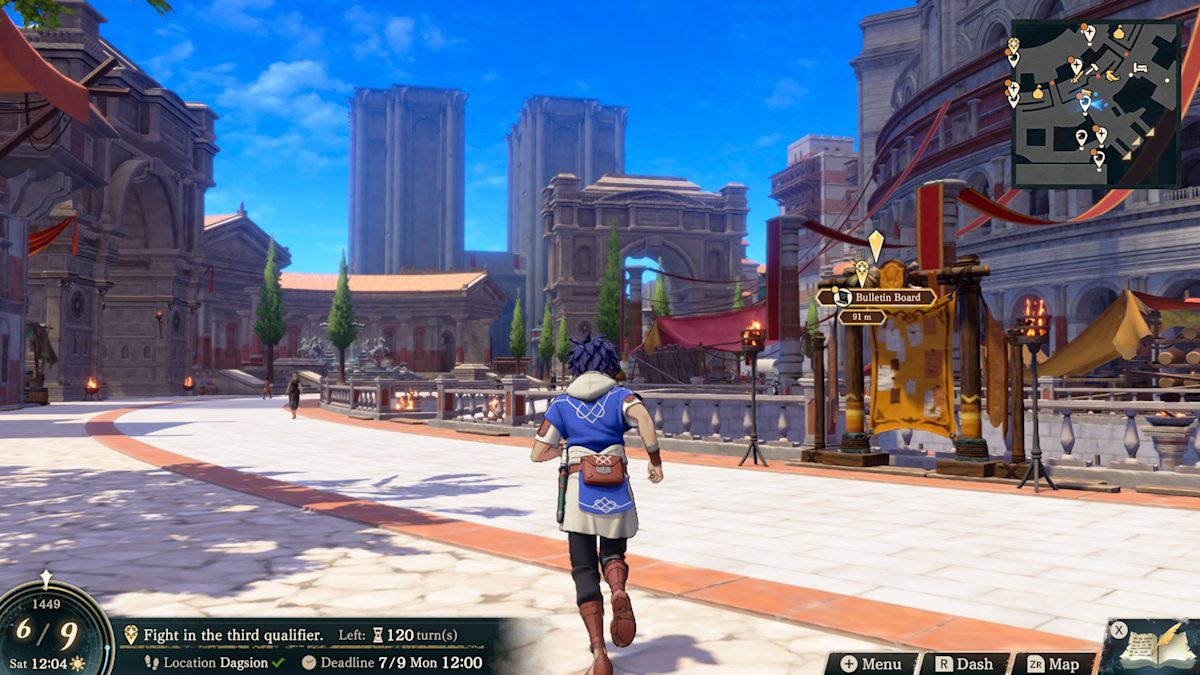
The story opens in Dagsion, capital of the Dagdan Empire and host city for the Heroic Games, a tournament that doubles as the game's hub world. Four playable Flame Lords — Cai, Dietrich, Theodora and Leda — each lead a separate Part 1 campaign inside that tournament. The four paths don't share inventories or deployment slots while you're playing them individually, but characters you recruit on one path carry their stats forward once the paths converge later in the story, so nothing you build early goes to waste.
Which path to start on
All four campaigns are playable from the outset and there's no wrong choice, but they aren't equally friendly to new players. Cai's path is widely regarded as the cleanest mechanical introduction: it front-loads the tutorial systems and eases you into Blaze Arts before throwing anything punishing at you. If you'd rather follow the game's central mystery first, Theodora's path leans hardest into story and is a reasonable opener too. For a full run through Part 1, the smoothest difficulty curve comes from playing Theodora, then Cai, then Leda, and saving Dietrich, mechanically the sharpest of the four, for last.
Recruiting allies through Renown, gifts and Stage Shows
Recruitment in Fortune's Weave runs on two connected systems: character-to-character support, built through gifts and shared meals at camp, and a global Renown stat that unlocks story-required recruits as it climbs. A handful of characters are locked behind specific paralogue side missions instead, so skipping a paralogue can mean permanently missing a unit on that route. None of this should stop you from picking up characters late. Later recruits arrive already leveled and geared close to your current party, rather than dragging three chapters behind.
- Give gifts that match a character's stated preferences to raise support fastest.
- Cook and share meals at camp between battles for a smaller, repeatable support boost.
- Clear paralogues tied to a specific character before moving on, or you may lose access to them.
- Watch for Stage Show events during Heroic Games festivals. They raise Renown and can unlock recruits.
Blaze Arts: the system that decides every fight
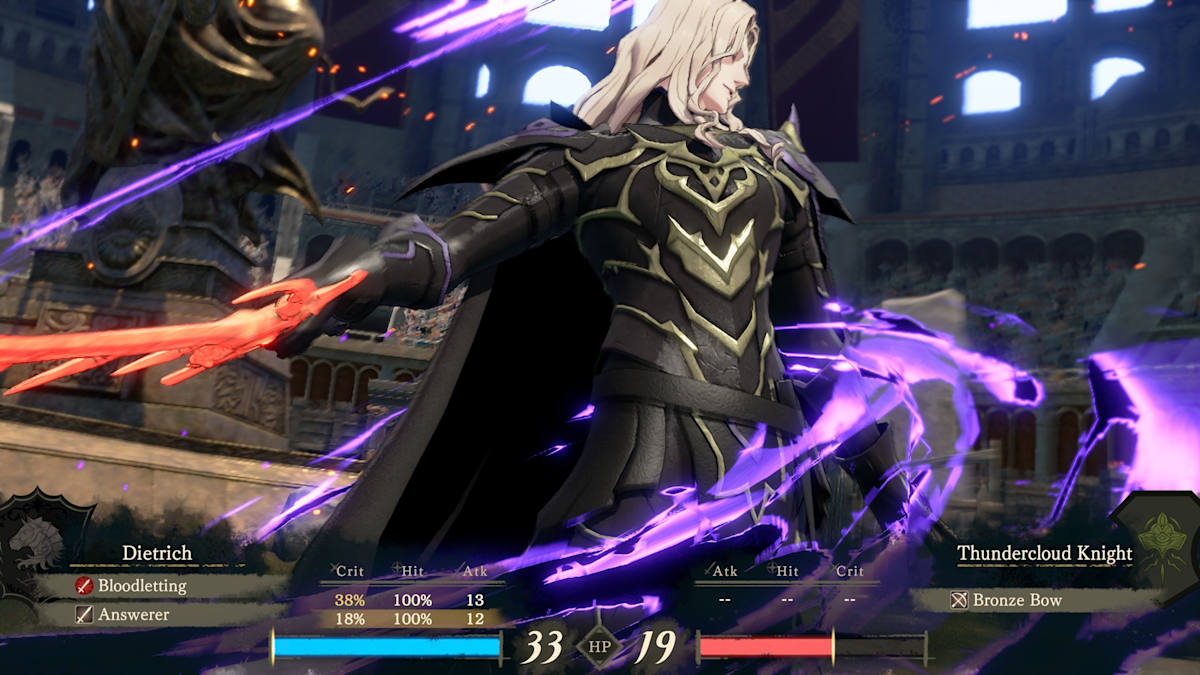
The signature new mechanic is the Blaze Art, a powerful attack that costs a unit HP to use. Each cast fills that unit's Blaze Gauge. At the halfway point the unit enters Overblaze, a temporary buff to stats and Blaze Art strength. Push the gauge all the way to full and it triggers Burst instead: max HP is halved and buffs are stripped, but the attack that triggers it ignores half the target's defense. That tradeoff is worth planning around rather than triggering by accident. See the mechanic's full breakdown for the exact numbers per class.
Weapons without a triangle
Fortune's Weave also drops the sword-beats-axe-beats-lance-beats-sword rule that anchored Fire Emblem combat for two decades. Weapon types now carry fixed traits instead: swords deal bonus damage on a follow-up hit, lances get a flat bonus against mounted and cavalry units, and axes trade lower accuracy for a guaranteed minimum amount of damage regardless of the target's defense. Build a squad around those traits rather than around type match-ups. An axe user is worth keeping specifically for chipping down heavily armored targets that would otherwise no-sell your hits.
Intelligent Systems walked through several of these changes directly in an official Ask the Developer feature, and the game's wiki keeps a running log of unit and class data as players fill it in. None of the four Part 1 campaigns is short, so pick a lord, expect fifteen-plus hours before the paths meet, and keep an eye on your Blaze Gauge before you swing.