Final Fantasy Resonance: Which Starting Vision to Pick and How Stagger Works
Final Fantasy Resonance launches today with a Vision system built on timing and stagger. Here's which starting Vision to pick, how the Timeline works, and how to break enemies fast.

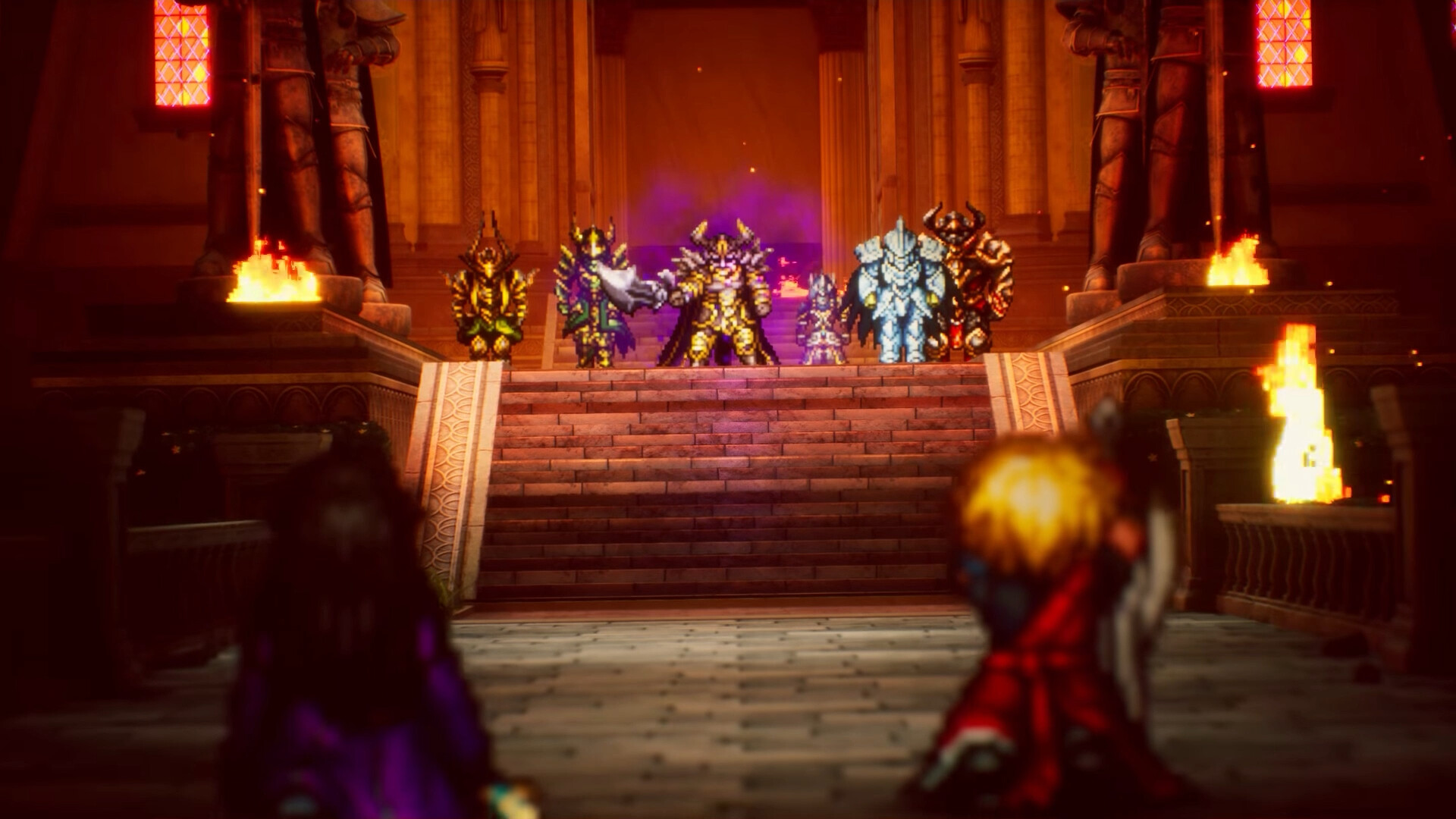
A story confrontation in Final Fantasy Resonance's HD-2D world. Image: Square Enix.
Final Fantasy Resonance is out today, October 22, on PlayStation 5, Xbox Series X|S, Nintendo Switch, Nintendo Switch 2 and PC. It's the series' first HD-2D entry, built around the first story arc of the old mobile game Final Fantasy Brave Exvius, and its hook is the Vision system: you don't recruit a cast of unique heroes so much as summon echoes of Final Fantasy's own cast to fight alongside your knight, Rain, and his party. The system looks simple in the opening hours and gets a lot less simple once you're staring down a stagger window with the wrong Vision equipped.
What a Vision Actually Does
A Vision is an echo of a classic Final Fantasy character — Cloud, Tidus and the Warrior of Light are confirmed, and Sephiroth shows up as a challengeable fight rather than a party member. Equip one on a party member and it boosts that character's stats and hands them the Vision's unique skills for as long as it's equipped. The useful part: skills a character has already learned stay unlocked even after you swap to a different Vision, as long as they still fit inside that character's ability point limit. That means early Visions aren't a one-and-done pick — they're a way to stock a character's permanent skill list before you move on to something stronger.
Visions themselves come from vision crystal sanctums scattered through the world, and you strengthen the ones you have with Magicite, which raises both their stats and the abilities they grant when used. Square Enix has also confirmed there's no gacha here — pulling for a Vision isn't a mechanic, and a Vision's usefulness isn't tied to rarity, so there's no pressure to chase a premium pull before you can field a competent party.
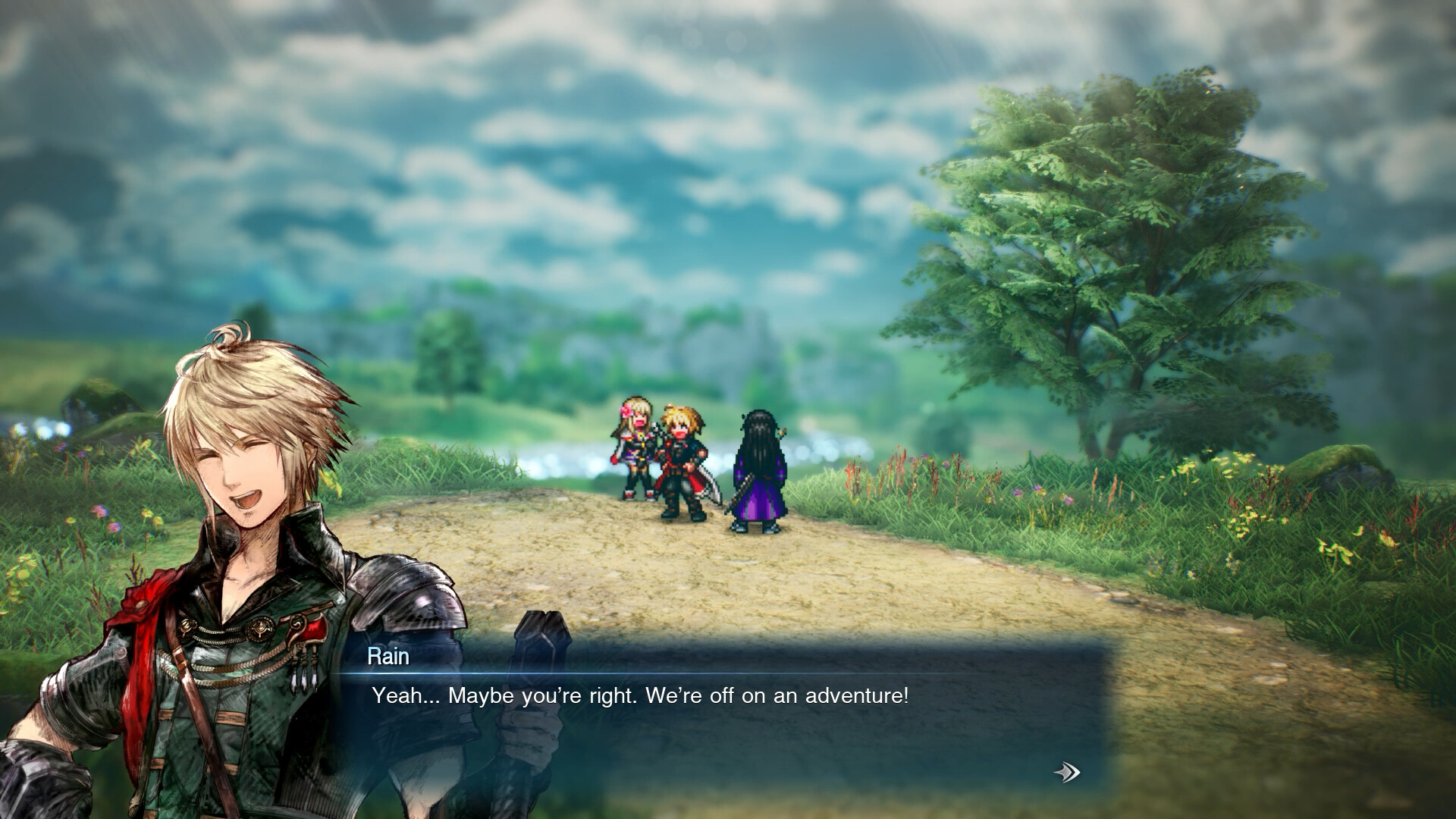
Picking Your Starting Vision: Tronn or Leah
The opening chapters put the choice between two starting Visions, Tronn and Leah, and it shapes how your first several hours play out.
- Tronn grants Fire, Blizzard and Thunder. It's the pick if you want to cover elemental weaknesses immediately — early enemies lean hard on a single weak element, and having all three basic spells on one character means you're never caught without the right tool.
- Leah grants Cure and Shell. It trades offensive flexibility for survivability, which matters more if you're playing on a harder difficulty or just want fewer trips back to town after a bad pull of random encounters.
Neither pick locks you out of the other skill set permanently, since later Visions cover the same ground, but Tronn is the safer default for a first run — elemental coverage solves more problems in the opening chapters than a second healer does, and you can lean on items for emergency healing until a dedicated support Vision joins.
How Turns and Stagger Actually Work
Battles run on a Timeline shown across the top of the screen: your party's upcoming turns appear in blue, enemy turns in red, and the order updates as speed, buffs and enemy actions shift it. Reading that bar before you commit an action matters more than it looks like it should — an enemy that appears to be skipping its turn is usually just slotted further down the Timeline, not actually gone.
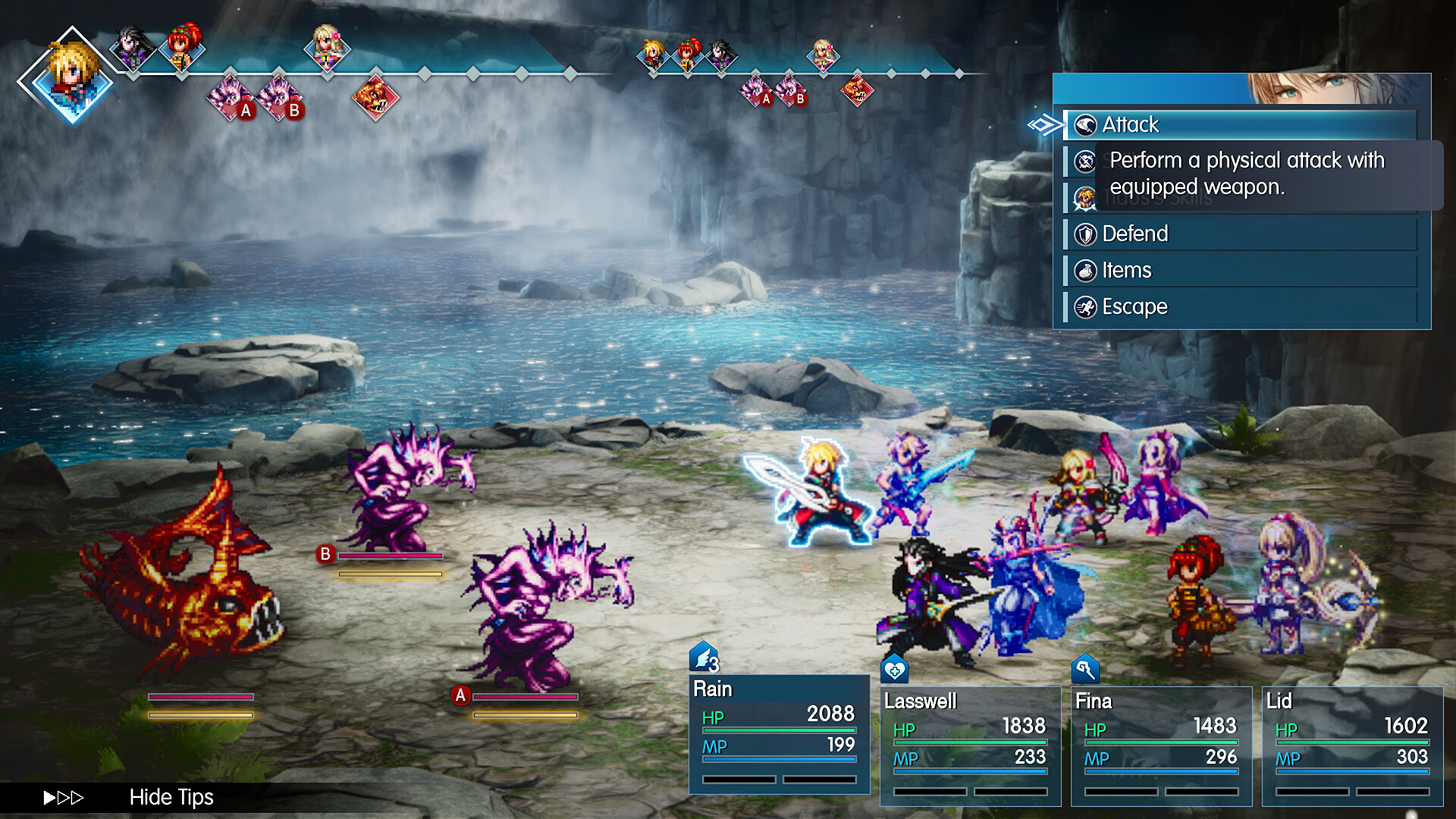
Stagger is the system built on top of that. Hit an enemy with the elemental or physical weakness it's vulnerable to and you chip away at a hidden break threshold; once it's broken, the enemy is staggered and loses its next action entirely, giving your party a free round to pour on damage. This is where single-target spells pull ahead of all-target ones: an all-target cast spreads its power across every enemy on screen, which is fine for clearing trash but weak per hit, while single-target casting puts the full value of the spell into breaking one target fast. Save the all-target spells for groups of weak enemies and go single-target when you're hunting a stagger window on anything tougher.
Carrying Your Demo Save In
If you played the free Chapter 1 demo that's been live since early September, your save carries straight into the full release, roughly three to five hours ahead of where a fresh save starts. That's worth doing even if you don't love the demo's pacing — it banks your starting Vision choice, any Magicite you spent, and whatever gear you found, so you launch into Chapter 2 already set up rather than replaying the opening.
Quick Checklist for Launch Day
- Pick Tronn for elemental coverage unless you specifically want Leah's early healing.
- Watch the Timeline before committing a turn — enemy order isn't random, it's visible.
- Use single-target spells to chase a stagger window, all-target spells to clear groups.
- Spend Magicite on Visions you're actually using; it raises their stats and their granted abilities together.
- Carry over your demo save if you have one — it skips nothing, it just starts you ahead.
Resonance's combat loop rewards paying attention to that Timeline bar far more than it rewards raw party level, which is a deliberate throwback to the stagger-driven battles of more recent mainline entries. Full details on platforms and pricing are in our launch-day breakdown of Final Fantasy Resonance. For the publisher's own rundown of the game and its systems, see the official Square Enix announcement, the Steam store page, the Nintendo Switch listing and the game's ESRB rating.